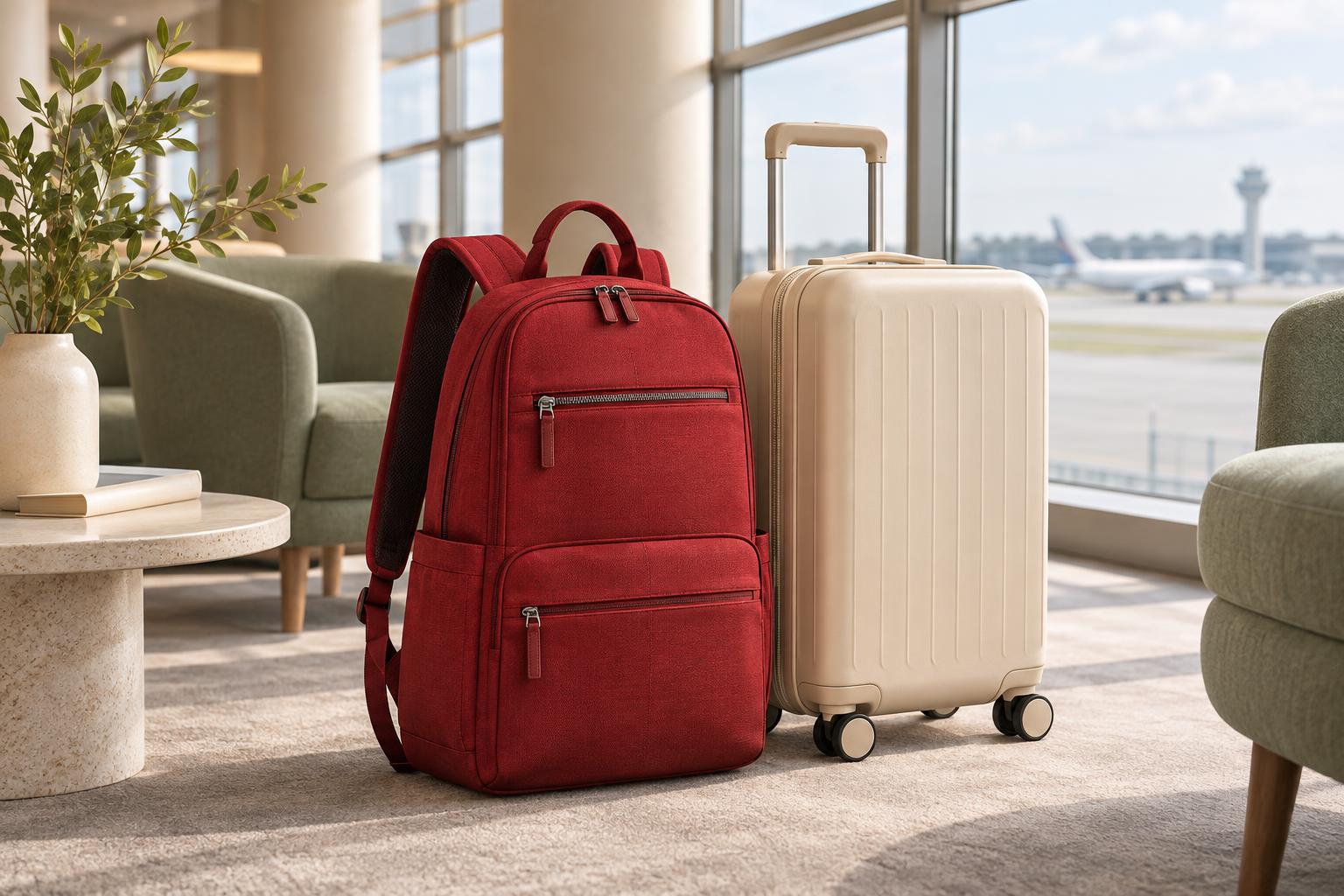
1. Give each bag a job
Treat the personal item as an in-seat and in-transit kit: documents, medication, electronics, water bottle, small comfort items, and one contingency layer. Treat the carry-on as the compact wardrobe and the items you can live without for a few hours. This separation reduces rummaging and gives you a fallback if the larger bag must be checked at the gate.
2. Pack for the interruption
Unexpected delays are easier when the personal item contains a charger, essential medication, a snack, a pen, and something that makes waiting less tiring. Families should also consider one spare outfit for a child and a small cleanup kit. Keep liquids and batteries packed according to current airport and airline guidance; rules can differ by route and may change.
3. Check the airline before leaving
Carry-on and personal-item dimensions are not universal. Airlines can publish different size, weight, and fare rules, and some low-cost fares have tighter allowances. Use your airline’s own baggage page as the final authority. PackRite explains planning logic; it does not replace current airline instructions.
The short version
Choose for your real route, test the decision before departure, and verify changing airline or product details from authoritative current sources.